
Cramp
 XII. He bears a Cramp cramped. It
is also termed, a double Cramp.
XII. He bears a Cramp cramped. It
is also termed, a double Cramp.
Cramp
 XIII. He beareth a Cramp, or an Iron
Cramp. These are strong Barrs of
Iron made to hold Timber work together in old decayed
Houses, which kind of Work is termed Cramping, from
whence these Irons had the name of Cramps.
XIII. He beareth a Cramp, or an Iron
Cramp. These are strong Barrs of
Iron made to hold Timber work together in old decayed
Houses, which kind of Work is termed Cramping, from
whence these Irons had the name of Cramps.
Barnacle
 Image from published plate
In the Sinister chief is placed a Barnacle made after the German manner with the Teeth on the outsides, with a Ring to run it close together.
Double cramp
 XIV. This is another form of a double Cramp
which I have seen very ancient in Draughts of Coats of
Arms.
XIV. This is another form of a double Cramp
which I have seen very ancient in Draughts of Coats of
Arms.
Cramp
 XV. This is also the Delineation of a Cramp, as it
was made by our Fore-fathers: of which I shall say
no more but give you their forms.
XV. This is also the Delineation of a Cramp, as it
was made by our Fore-fathers: of which I shall say
no more but give you their forms.
Crampette
 XVI. He beareth a Crampette, or a little
Cramp. Some term this a Crampnett.
XVI. He beareth a Crampette, or a little
Cramp. Some term this a Crampnett.
Horse lock
 XVII. He beareth a Horse-Lock.
It is also termed a Fetter-Lock.
XVII. He beareth a Horse-Lock.
It is also termed a Fetter-Lock.
Shakle, that as compasseth the Horse-foot.
Turn of the Shackle, where it is made fast to the Socket.
Socket or Barrel.
Ward-hole, the hole at the end of the Shackle.
Ward, and his round head, that as is put into the Socket, to hold in the Shackle.
Key and Wards, in the bended end.
Horse locks
 XVIII. He beareth three Horse, or Fetter Locks.
Padlock
 XIX. He beareth an Half round Padlock.
Padlock
 XX. He beareth a Pad-Lock.
If it be round it is generally termed a Padlock
without any other addition; yet some have called it a
Pound Padlock, or a Port-mantle lock, because
most used for their Security.
XX. He beareth a Pad-Lock.
If it be round it is generally termed a Padlock
without any other addition; yet some have called it a
Pound Padlock, or a Port-mantle lock, because
most used for their Security.
Hanging lock
 XXI. He beareth an Hanging lock.
Of these sorts of Locks for the hanging upon Shop Doors, and Gates in Fields, and such like places.
All these Locks are opened with Keys, having in
them all those things which belong to other Locks which
I shall not need to mention again.
XXI. He beareth an Hanging lock.
Of these sorts of Locks for the hanging upon Shop Doors, and Gates in Fields, and such like places.
All these Locks are opened with Keys, having in
them all those things which belong to other Locks which
I shall not need to mention again.
Door hinge
 XXII. He beareth a Door Hinge between
a Dove-Tail, and an Hach Hinge.
These are the three sorts of Hinges which are generally used in all things that require an opening or turning.
XXII. He beareth a Door Hinge between
a Dove-Tail, and an Hach Hinge.
These are the three sorts of Hinges which are generally used in all things that require an opening or turning.
The first is the Door Hinge, which is used to all great Doors of Houses, Barns, Stables, Gates of Towns and Cities, Parks and Fields, &c. which for length and fashion is made and adorned at the ends, and on the sides, according to the fancy and pleasure of the maker, with Flourishes, Caroses, Scrolls, and heads of Flowers de lis, and such like; which being fastned on the Door or Gate, is by the Eye thereof hung upon an hook droven into a Post on which it turneth: from whence it is termed a Hook and Hinge, or a Hinge for a Hook.
Dove tail hinge
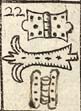 Image from proof plate
The second is called a Dove-Tail Hinge, because it is broad at the ends like a Dove or Pigeons Tail. It is used for all small Doors of Wainscot, Cubbards, Boxes and Trunks; where nailing may be on both sides.
H hinge
Image from proof plateThe third is the H. Hinge, being in the form of the Roman H. this sort of Hinge is used to such kind of Doors, Cubbards, or Presses, which will not admit of breadth, but of height, to have them made fast: and that is through the narrowness of the Timber, or Stiles on the Edges of the Doors and Places where they are fixed: See another fashion of them numb.32.
To these may be added a fourth, which is a Composed Hinge, both of a Door, and a Dove-tail Hinge; or of a Door, and H. Hinge: and this sort of Hinge is by Workmen termed, a Cross Garnet Hinge.
Related text(s) Hinge parts
Staples
 XXIII. He beareth two Iron Staples, (or two
Stables) and as many Fretted of the
second. These are things of Iron made of several forms,
as half round, square, and triangular: and are droven into wooden Work against the Bolts of Locks,
and Door Bolts: to shoot into, to keep them fast and
close together.
XXIII. He beareth two Iron Staples, (or two
Stables) and as many Fretted of the
second. These are things of Iron made of several forms,
as half round, square, and triangular: and are droven into wooden Work against the Bolts of Locks,
and Door Bolts: to shoot into, to keep them fast and
close together.
Staples

 XXIV. He beareth an half round Staple,
and a triangular Staple: or a Staple in form of a
three square.
XXIV. He beareth an half round Staple,
and a triangular Staple: or a Staple in form of a
three square.
 Previous section
 Next section
