
Grape

XXIX. He beareth a Vine Branch with Fruit.
... The black Clustered Grapes are set thick on the bunches, and are small and black.
The Muscadine and Canada Grape, are white, the latter called the Parsly grape, from the Leaves, which are more cut in and divided than any other.
The Raisin Grape is large and red.
Cluster or Bunch of Grapes

Vine Leaf with its Tendrell

Vine

Mulberry Stem

Bramble Berry or Black Berry

Mulberry Leaf

Gooseberry

Curran Tree with two races of Currans

Fig Tree Fructed

Fig Leaf

Pole supporting a Branch of Hops

Sycamore Tree Fructed

Olive Tree Fructed

Olive Branch Fructed

Ginny Pepper and Leaf slipped

Gall Branch Fructed
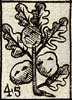
Chestnut with two leaves

Yew Tree Branch Fructed

Barberry Branch Fructed

Hassell Slip and Husk

Filbert

L. He beareth three Filberd Nuts inclosed in their Husks with Foot Stalks on a Stalk.
The Filbert of Constantinople and Macedonia are all covered with a jagged and cut husk, as if the husk were many doubles over it.
The white and red Filberds differ from the common Hassel Nut, in that the Husks are longer, covering the Nut.
Cluster of Hassel Nuts slipped

Elm Leaf

Alpine Leaf

 Previous section
 Next section
