
Trumpet marine
 A Trumpet Marine,
It is a long hollow
instrument both in the
neck and body about
two yards and halfe, or
three yards high. It
hath only on thick gut
string, which is played
upon with a long Bow
of Base Viol stick at the
head of it a little below
the winding hole. The
string is wound up by a
key set on a square pin
and is fastned to an Iron
wheel with notches on,
for a catch to fall in and
so hold it when it is at
that height and is fitt
to be played on.
A Trumpet Marine,
It is a long hollow
instrument both in the
neck and body about
two yards and halfe, or
three yards high. It
hath only on thick gut
string, which is played
upon with a long Bow
of Base Viol stick at the
head of it a little below
the winding hole. The
string is wound up by a
key set on a square pin
and is fastned to an Iron
wheel with notches on,
for a catch to fall in and
so hold it when it is at
that height and is fitt
to be played on.
The face part is euen and smooth, but the back part is made into 5 or 6 Angles and is open at the bottom or belley in which are fixed 4 wiers which are screwed up to the same musicall height as the great gut string is: the wiers giue an echo the the great string when it is played on, to admiration.
French oboe
 A Franch Hoboy, it consists
in 4 parts which go in, one to
another.
A Franch Hoboy, it consists
in 4 parts which go in, one to
another.
a. The reed.
b. The top peece.
c. The midle peece.
d. The Povilion or bottom peece.
e. The brass keys.
Double curtaile
 A double curtaile.
This is double the
bignesse of the single,
mentioned cha.16. n. 6. and its play is 8
notes deeper. It is as
it were 2 pipes fixed
in on thick base pipe,
one much longer then
the other; from the
top of the lower,
comes a crooked pipe
of Brass in form of an
S, in which is fixt a
Reed, through it the
wind passeth to make
the Instrument make a sound. It
hath 6 Holes on the out side and one
Brass key called the double F, fa ut. On
that side next the man or back part are 2
brass keys, the highest called double La
sol re, and the other double B mi.
A double curtaile.
This is double the
bignesse of the single,
mentioned cha.16. n. 6. and its play is 8
notes deeper. It is as
it were 2 pipes fixed
in on thick base pipe,
one much longer then
the other; from the
top of the lower,
comes a crooked pipe
of Brass in form of an
S, in which is fixt a
Reed, through it the
wind passeth to make
the Instrument make a sound. It
hath 6 Holes on the out side and one
Brass key called the double F, fa ut. On
that side next the man or back part are 2
brass keys, the highest called double La
sol re, and the other double B mi.
Theorbo lute
 A Theorbo Lute,
it is an Instrument
with a long neck, and
a crooked head in
which is fixed two
pins or pegs. In the
higher part of the
neck is 4 cavities
each having two pins
in them. The midle
of the neck a larg
cavitie in which are
placed 6 pins on the
right side and 7 on
the left side. The
lower part of the
neck is diuided into
6 fretts each made
by a Bowell string;
the Body is made
Peare like, rounder at bottom then
aboue, with a flat, face and round back
and wier strings, 23 in number.
A Theorbo Lute,
it is an Instrument
with a long neck, and
a crooked head in
which is fixed two
pins or pegs. In the
higher part of the
neck is 4 cavities
each having two pins
in them. The midle
of the neck a larg
cavitie in which are
placed 6 pins on the
right side and 7 on
the left side. The
lower part of the
neck is diuided into
6 fretts each made
by a Bowell string;
the Body is made
Peare like, rounder at bottom then
aboue, with a flat, face and round back
and wier strings, 23 in number.
Poliphant
 A Poliphant,
of some called a
Poliphon. It is
an hollow yet
flat kind of Instrument, containing three
dozen and 5 wier
strings to be
played upon.
On the right side
the neck are
three pins; on the
left side about
nine pins, and at
the bending or
corner in the
midle of the neck 5 pins: and below the
neck on the top of the body are 8 pins
fixed, as the figure it selfe will giue you
the best description of it.
A Poliphant,
of some called a
Poliphon. It is
an hollow yet
flat kind of Instrument, containing three
dozen and 5 wier
strings to be
played upon.
On the right side
the neck are
three pins; on the
left side about
nine pins, and at
the bending or
corner in the
midle of the neck 5 pins: and below the
neck on the top of the body are 8 pins
fixed, as the figure it selfe will giue you
the best description of it.
Cornet
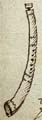 A cornett. It is a long and
somewhat bending Instrument
made of an Horn, and some
tyme garnished at the mouth,
middle, and end with plates of
siluer: but generally plaine.
It hath 6 holes aboue for the
fingers and 2 under for the
thumbs. It is a delicate
pleasant wind musick, of well
played and Humered.
A cornett. It is a long and
somewhat bending Instrument
made of an Horn, and some
tyme garnished at the mouth,
middle, and end with plates of
siluer: but generally plaine.
It hath 6 holes aboue for the
fingers and 2 under for the
thumbs. It is a delicate
pleasant wind musick, of well
played and Humered.
Trumpet marine
 There is an other kind of Instrument
of the same form of the Kitt, but of a
larger belly and neck, both slender but
being to the length of 2 yards and more:
it hath but one string made of beasts
gutts to the thickness of an ordinary
two penny cord. It is called a Trumpett Marine, and is playd on by a long
Bow or Fiddle stick. Those that are
skilled in playing upon it, they will
counterfeit the sound of any kind of
Musick, whither wind or stringed Instruments; principally all sorts of the
sounding of a Trumpett, from which I
suppose it had its name of a sea
Trumpett.
[Identified from the description; not named on the drawing.]
There is an other kind of Instrument
of the same form of the Kitt, but of a
larger belly and neck, both slender but
being to the length of 2 yards and more:
it hath but one string made of beasts
gutts to the thickness of an ordinary
two penny cord. It is called a Trumpett Marine, and is playd on by a long
Bow or Fiddle stick. Those that are
skilled in playing upon it, they will
counterfeit the sound of any kind of
Musick, whither wind or stringed Instruments; principally all sorts of the
sounding of a Trumpett, from which I
suppose it had its name of a sea
Trumpett.
[Identified from the description; not named on the drawing.]
Castanets
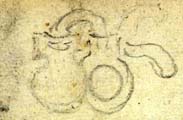 Castinatts. These are things made
of Lignum Vitae an hard Wood, much
after the form of cochle shells but
smooth, round or convex outwardly and
concave within, they are made to fitt
one the in the edges and being
hung on the Hand by a double bobbin
lace, yong women and children are
taught to clap the two shells together
and to quaver them, that both to a
voice and danceing it make a kind of
Pritty Hermony.
Castinatts. These are things made
of Lignum Vitae an hard Wood, much
after the form of cochle shells but
smooth, round or convex outwardly and
concave within, they are made to fitt
one the in the edges and being
hung on the Hand by a double bobbin
lace, yong women and children are
taught to clap the two shells together
and to quaver them, that both to a
voice and danceing it make a kind of
Pritty Hermony.
Un-named lute-like instrument
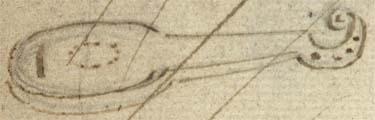 Not named on the drawing but possibly a Kit without its strings.
Compare chapter 16, no. 128c.
Not named on the drawing but possibly a Kit without its strings.
Compare chapter 16, no. 128c.
Un-named oboe-like instrument
 Not named on the drawing.
It resembles the China Trumpet
in chapter 16, no. 116b.
Not named on the drawing.
It resembles the China Trumpet
in chapter 16, no. 116b.
Un-named type of horn
 Not named on the drawing. It resembles the China Trumpet
in chapter 13, no. 143.
Not named on the drawing. It resembles the China Trumpet
in chapter 13, no. 143.
 Previous section
 Next section
